
Warrior Moms Business Development Project; Uplifting Mothers, Empowering Futures
Project Report

Introduction: A Project Born from Empathy
Across the vibrant communities of Nigeria, a quiet group of women carry the heaviest burdens; mothers of children living with sickle cell disease. Affectionately called Warrior Moms, these women are caregivers, providers, and the emotional anchors of their families. Their days are often spent in hospital corridors or beside a child’s bed, balancing worry with willpower, love with labor.
The Warrior Moms Business Development Project was born out of a shared conviction: that no woman should have to choose between caring for her child and earning a living.
In June 2025, we launched a 3-month pilot initiative to support 45 Warrior Moms, equipping them with business skills, mentorship, financial literacy, and access to micro-capital. This report captures the voices, challenges, and opportunities we encountered along the way.
Understanding the Context: The Dual Burden of Caregiving and Poverty
Sickle cell disease is not only a health crisis, it’s an economic one. Many Warrior Moms were forced to abandon small businesses because of their child’s frequent hospital visits or chronic health episodes. Others never had the chance to start.
The reality is sobering:
Most women were petty traders or smallholder farmers.
Many lost their livelihoods entirely due to the demands of caregiving.
Few had access to capital or training opportunities.
Despite these obstacles, every woman we met shared the same dream to rebuild, to grow, and to thrive.
“I used to sell rice but had to stop when hospital visits became constant. This program gave me hope again.”
Participant, Abaji, Nigeria
Methodology: Listening Before Acting


Before implementing training or funding, we listened. We conducted two structured surveys:
A Needs Assessment Survey (45 responses), A Funding Readiness Survey (focused on understanding their businesses and plans) The surveys were designed to understand not just what the women lacked, but what they were ready for. The results helped shape our cluster-based training model and informed the disbursement of support funds.
Key Findings from the Needs Assessment
Who Are the Warrior Moms?
Our needs assessment revealed that most of the women we serve, the “Warrior Moms” are primarily engaged in petty trading and small-scale farming. These mothers, who are also the primary caregivers of children living with sickle cell disease, often run informal, home-based businesses. In terms of education, the majority had completed secondary school or less, which influences both their access to resources and confidence in formal business environments.
The Biggest Barriers They Face
Across the surveys conducted, three key challenges repeatedly stood out. First and foremost is the lack of capital, which was the leading cause of business collapse or stagnation. Many women expressed a strong desire to continue or expand their businesses but were hampered by insufficient funds. The second major barrier was the lack of equipment or tools, particularly among those engaged in farming or artisanal work. Finally, interrupted business continuity emerged as a significant issue. The unpredictable and often urgent caregiving demands associated with sickle cell disease meant that many women were frequently forced to put their businesses on hold, sometimes indefinitely.
Preferences and Aspirations
When asked about training and support, most women expressed a preference for flexible training schedules, particularly in the evenings or on weekends when their caregiving duties might be less intense. Beyond financial assistance, they showed a strong interest in mentorship, business coaching, and improved access to markets. Just as importantly, the assessment highlighted a deep emotional need for safe, supportive spaces where they could share their experiences, receive encouragement, and build resilience within a community of peers. The findings underscored a powerful truth: these women are eager to thrive, but they lack the basic resources to do so.
What We Learned from the Funding Readiness Survey


In addition to assessing their challenges, we asked women who were ready to start or restart their businesses to share specific needs. The responses gave us valuable insight into their potential and ambitions.
Types of Businesses Proposed
The types of businesses they envisioned were diverse but practical. Many focused on retail, such as grain trading, mobile recharge (airtime/data sales), and POS (Point of Sale) services. Others leaned into farming ventures involving vegetables, cassava, and maize cultivation. A significant number proposed artisanal trades, including tailoring, soap making, and handmade bag production. These are enterprises that fit into their caregiving routines and require relatively low startup costs.
Funding Needs and Use Cases
The amount of funding requested varied, with most women indicating a need between ₦100,000 and ₦500,000. Their proposed uses for these funds were highly targeted: inventory purchase, acquisition of equipment and tools, rental of market space, and in some cases, expansion of existing operations. These are modest but critical investments that would allow them to regain control over their livelihoods.
Revenue Potential (Self-Reported)
Even more compelling were the revenue projections. Women reported potential daily profits ranging from ₦5,000 to ₦80,000, with market day earnings often significantly higher. These figures demonstrate that many women already have viable business models, what they lack is the capital to reactivate them.
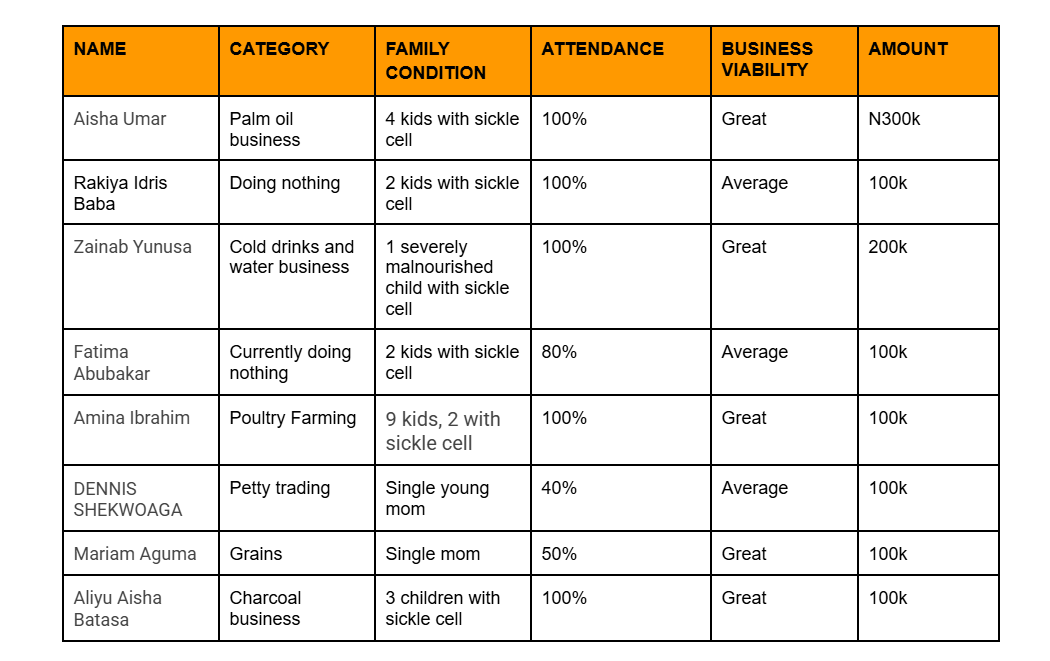
The criteria for choosing the women who received the funding was based on key factors like family conditions, cluster meeting attendance, business viability, amount requested for. Each woman was given a seed fund of $10 to add to their business as a general effort with only 6 selected for funding.
Here is a breakdown of the women selected.
One theme was consistent throughout the responses: these women have the will, the skills, and the plans to succeed. What stands in their way isn’t ambition, it’s the relentless, resource-draining reality of caring for children with chronic illness. Every naira goes toward medication, transport, and emergencies. The result is that promising businesses are put on hold, not because they failed, but because caregiving consumed everything.
More Than Training: Building a Community of Courage
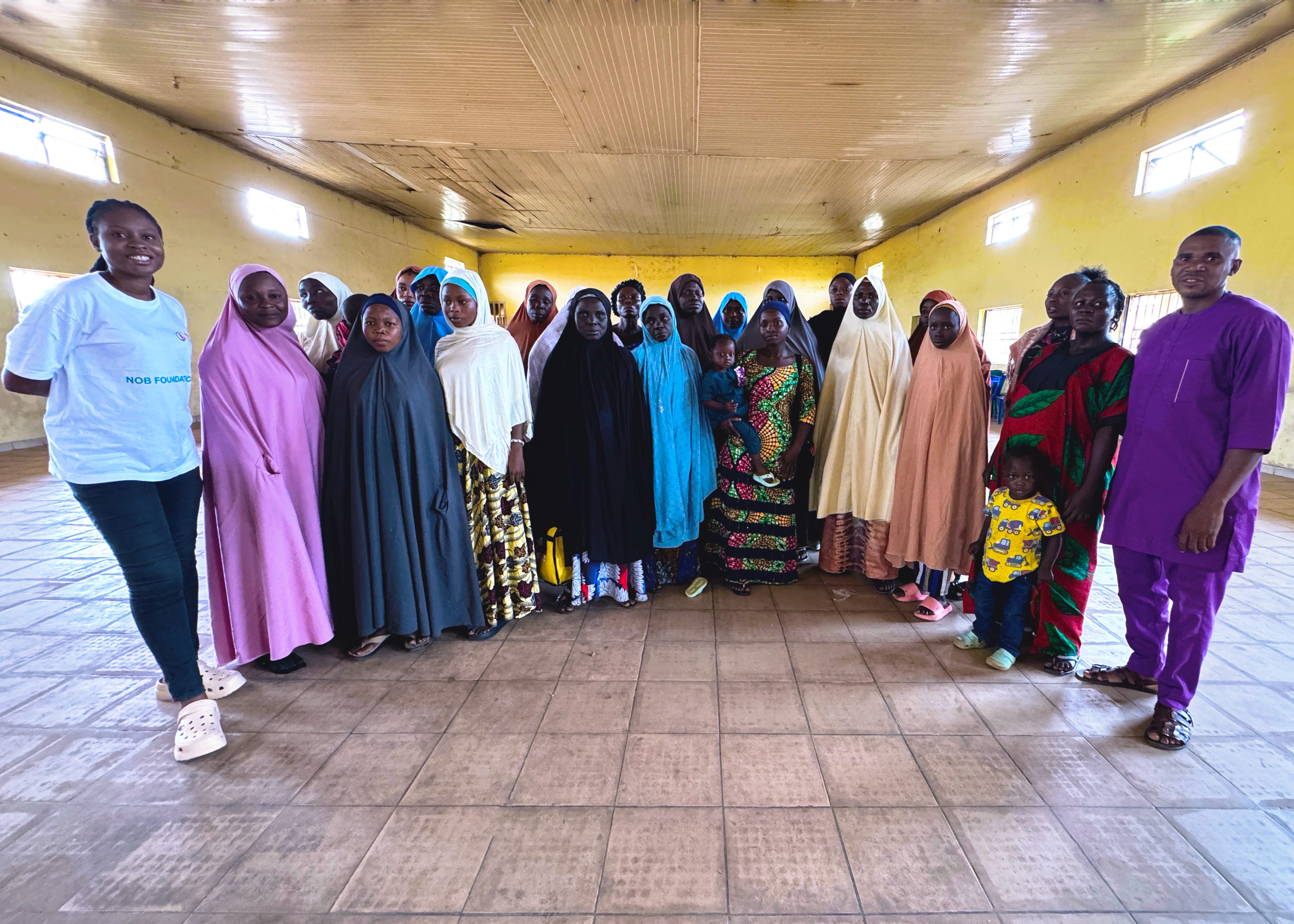
What we thought would be business training became much more. Our Field Experience was filled with stories we will continue to share.
Transport Challenges: Due to the distance between clusters, transporting volunteers was costly and logistically demanding. Some sessions required long hours of travel and coordination hence the session was shortened to 4 instead of 6.
Emotional Connections: The sessions became safe spaces for women to share their stories, losses, and hopes. Many had never participated in a program tailored to their specific struggles.
A Time to Teach and Uplift: The curriculum became a tool for emotional healing, not just economic strategy. We found ourselves educating women not only about budgeting, but about their worth and potential.
Skills, Not Just Support: Interest in new skills, digital marketing, bookkeeping, even agro-processing was strong. These women aren’t just looking for handouts; they’re eager to compete.
Recommendations for Scaling Impact
Our journey through this project revealed important lessons, and even bigger possibilities. To make this work sustainable, we recommend the following:
1. Strengthen Market Access: Link women to structured cooperatives and community markets, Support digital market tools (WhatsApp selling, cooperative branding)
2. Extend Mentorship and Peer Clusters: Monthly check-ins post-funding, Group-based accountability and learning models
3. Formalize the Warrior Moms Cooperative: Facilitate registration, saving schemes, and bulk purchasing, Create collective bargaining power for members
4. Invest in Volunteer Infrastructure: Provide travel stipends and local accommodation for trainers, Recruit from within communities to reduce travel burdens
Looking Ahead: A Movement in Motion
The first round of micro-grants has been released to qualifying participants enabling the women to restart businesses, scale operations, or launch income-generating ideas they have long nurtured.
But this isn’t the end. It’s a beginning. This project has sparked a movement, one that believes mothers shouldn’t be punished economically for loving their children. One that understands that financial empowerment is a form of care, too.
In 2026, we launch the next cohort of this project this time in a different community and we will be empowering the women with soft skills like baking, sewing, bag making etc.
Gratitude and Partnerships
We extend our heartfelt thanks to:
The Aziza Development Foundation (TADF) – for leading the mentorship model and managing volunteers with dedication and care.
Tech Herfrica - for supporting our digital literacy efforts and market-based skills training.
Your partnership helped turn our vision into impact.
Contact Us
To partner, support, or learn more, reach us at: